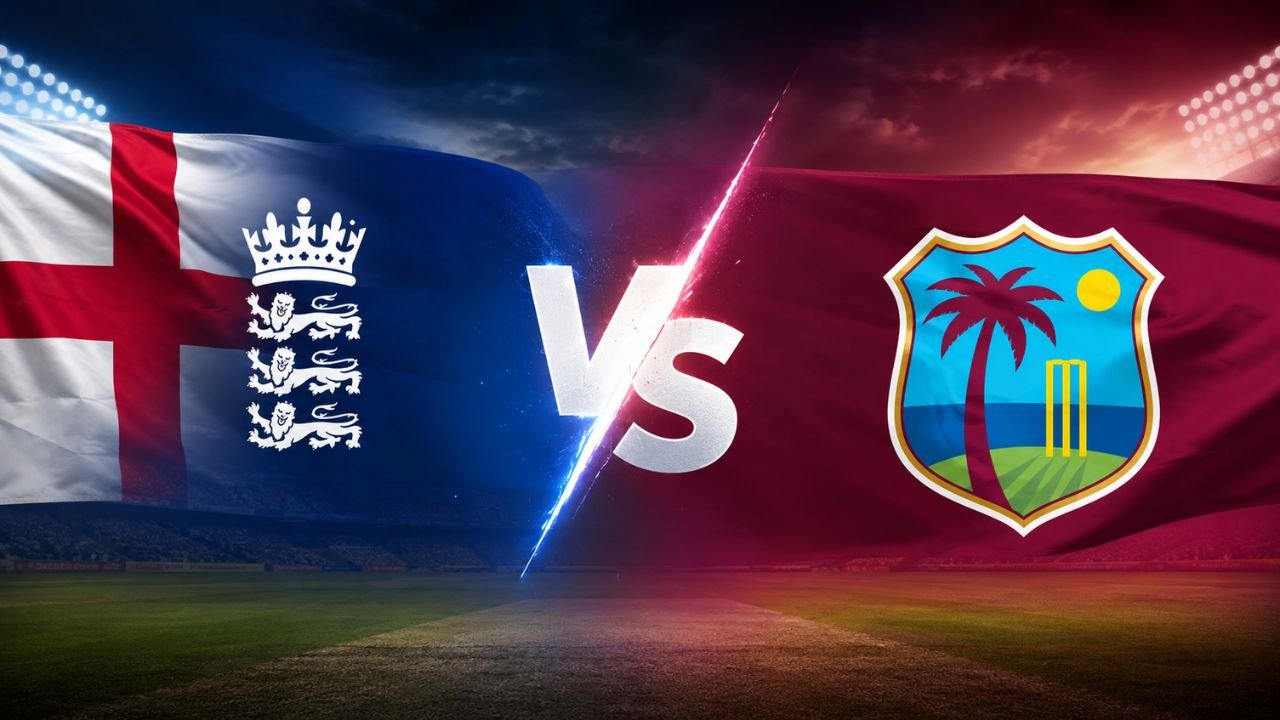
England vs West Indies — one of cricket’s most iconic rivalries returns under the stadium lights.
The england cricket team vs west indies cricket team timeline is not just a cricket rivalry. It is a mirror of how power shifts happen in sport.
England started as the establishment force. West Indies became the disruptor. Then T20 cricket flipped the equation again.
Most articles reduce this rivalry to scorecards and trophies. That misses the deeper point.
England vs West Indies has always been about identity, control, and adaptation.
One side built a structure.
The other built intimidation.
And in 2026, both are trying to reinvent themselves again.
Quick Timeline Snapshot
| Era | Dominant Team | Key Theme |
|---|---|---|
| 1928–1959 | England | Colonial control |
| 1960–1979 | West Indies Rising | Fast-bowling revolution |
| 1980–1995 | West Indies | Absolute dominance |
| 1996–2015 | England Recovery | Tactical modernization |
| 2016–2026 | Mixed | T20 chaos + white-ball evolution |
How the Rivalry Started (1928–1950s)
The rivalry officially began in 1928 when West Indies played their first-ever Test series against England.
At that point, England treated the Caribbean side almost like a developmental project rather than a genuine threat.
That assumption aged badly.
England won early encounters comfortably because West Indies lacked depth, infrastructure, and consistent pace bowling. But the raw talent was obvious.
By the 1950s, players like Sir Frank Worrell and Everton Weekes started changing how world cricket viewed Caribbean cricket.
This was no longer a ceremonial rivalry.
It became competitive.
The 1960s Changed Everything
The 1960s were critical because West Indies stopped trying to imitate England.
Instead, they built their own cricket identity.
That mattered.
Most successful sports teams emerge when they stop copying traditional powers. West Indies realized their strength was athleticism, aggression, and fast bowling.
England struggled with that transition.
The famous 1963 series showed the shift beginning. West Indies were no longer intimidated by English conditions.
And psychologically, that was the turning point.
The Real Power Era: 1976–1995
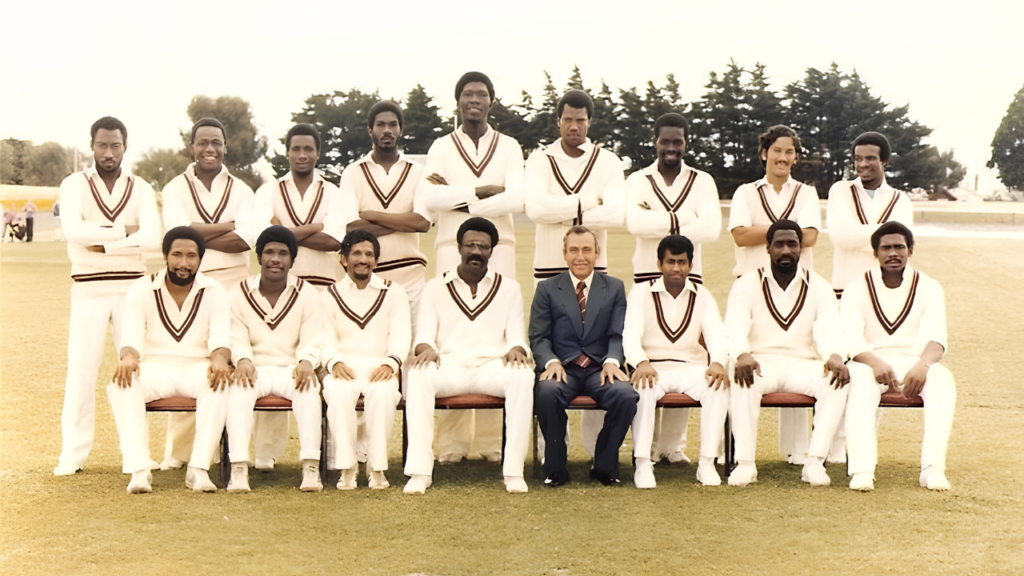
If you want the most important phase in the england cricket team vs west indies cricket team timeline, this is it.
West Indies didn’t merely beat England.
They broke them.
Why West Indies Became Unstoppable
Clive Lloyd built a system that modern franchises still study today.
Not emotionally driven cricket.
Not defensive cricket.
Pure pressure cricket.
Their formula was simple:
- Four elite fast bowlers
- Ruthless short-ball tactics
- Psychological intimidation
- Relentless fielding pressure
England simply had no answer for it.
This period included legends like the following:
- Viv Richards
- Malcolm Marshall
- Joel Garner
- Michael Holding
- Curtly Ambrose
- Courtney Walsh
The 1984 “blackwash” remains one of the harshest series defeats England ever suffered.
West Indies won 5-0.
Not narrowly. Brutally.
Most modern cricket fans underestimate how feared West Indies once were. Teams walked into series already mentally defeated.
That’s institutional dominance.
Why England Eventually Recovered
England’s recovery did not happen because of talent alone.
It happened because English cricket modernized faster financially and structurally.
That’s the uncomfortable truth.
County systems improved. Analytics improved. White-ball specialization improved.
Meanwhile, West Indies cricket became fragmented.
T20 leagues created wealth for players but weakened centralized Test structures.
This is where many nostalgic cricket discussions become dishonest.
Yes, T20 leagues hurt Test continuity.
But they also gave Caribbean players financial independence.
From a player perspective, franchise cricket was rational.
From a Test cricket perspective, it was damaging.
Both things can be true.
England’s White-Ball Revolution (2015–2022)
After the disastrous 2015 ODI World Cup, England completely rebuilt their white-ball philosophy.
They stopped playing “safe” cricket.
Instead, they embraced the following:
- Aggressive powerplay batting
- Deep batting lineups
- Matchup-based bowling
- Data-driven strategy
That transformation eventually produced:
- 2019 ODI World Cup
- Multiple elite T20 squads
- Consistent white-ball depth
Ironically, England borrowed some of the fearlessness that once defined the West Indies.
And West Indies, meanwhile, leaned even harder into T20 specialization.
West Indies vs England T20 World Cup Battles
The rivalry gained fresh life in T20 cricket.
Unlike Test cricket, where England eventually stabilized, T20 created volatility again.
West Indies became dangerous because they could win games in 30 minutes of chaos.
That’s why they remained unpredictable in ICC events.
The most famous modern moment remains the 2016 T20 World Cup final, where Carlos Brathwaite stunned England in the final over.
“Remember the name.”
Cricket history changed in four balls.
West Indies vs England Today Match: What Actually Matters in 2026?
The phrase west indies vs england today match trends heavily during bilateral series, but most fans focus too much on surface-level form.
The deeper issue is squad direction.
England in 2026
England currently looks structurally healthier in white-ball cricket.
Why?
Because they still possess:
- Better domestic depth
- Stronger analytics systems
- More flexible batting templates
- Better pace rotation management
But there’s a hidden risk.
England’s aggressive batting approach sometimes collapses under slow surfaces and scoreboard pressure.
That weakness keeps appearing in ICC tournaments.
West Indies in 2026
West Indies remain one of cricket’s highest-variance teams.
On their day, they can destroy anyone.
But consistency remains the problem.
The talent pipeline still produces explosive players, yet:
- bowling depth fluctuates,
- discipline disappears under pressure,
- and batting often becomes overly power-dependent.
Still, dismissing West Indies is dangerous.
T20 cricket rewards volatility.
Featured Snippet: Are England Good in 2026?
England remains one of the strongest white-ball teams in 2026 because of their aggressive batting depth, data-driven planning, and strong domestic system. However, their biggest weakness remains inconsistency against slower bowling attacks in pressure matches.
Featured Snippet: Are West Indies Improving in 2026?
West Indies are improving in T20 cricket due to explosive batting talent and franchise experience. Their challenge is consistency across formats, especially in Test cricket, where squad continuity and bowling depth remain unstable.
Featured Snippet: Which Team Has Higher Long-Term Growth?
England currently has higher long-term structural stability because of domestic investments and player development systems. The West Indies possess elite raw talent, but long-term growth depends on administrative stability and red-ball investment.
West Indies vs England Test Series History
The west indies vs england test series history tells two completely different stories depending on the era.
England’s Early Control
- Strong home dominance
- Better infrastructure
- Tactical discipline
West Indies Golden Era
- Fast-bowling supremacy
- Mental intimidation
- Unmatched pace depth
Modern Era
- England stronger overall
- West Indies capable of isolated upsets
- Home conditions increasingly decisive
One major trend stands out:
Home advantage matters far more today than it did during the West Indies dominance era.
That shows how difficult sustained greatness has become in modern cricket.
England vs West Indies T20 2026: What Analysts Are Watching

The upcoming england vs west indies t20 2026 contests are strategically interesting because both teams approach T20 differently.
England Strategy
- High-tempo batting
- Matchup analytics
- Flexible batting order
- Pace-off variations
West Indies Strategy
- Boundary-heavy batting
- Momentum cricket
- Individual explosiveness
- Short-burst pressure tactics
The risk for England is over-planning.
The risk for West Indies is underplanning.
Modern T20 often becomes a battle between structure and instinct.
West Indies vs England 1st ODI: Why Bilateral Cricket Still Matters
Many fans dismiss bilateral ODIs now.
That’s shortsighted.
Series like the west indies vs england 1st odi still reveal the following:
- bench strength,
- tactical experimentation,
- workload management,
- and emerging player roles.
Selectors care about these matches more than fans realize.
Especially before ICC tournaments.
West Indies vs England Today Match Scorecard: Why Raw Numbers Mislead
A west indies vs england today match scorecard rarely tells the full story.
Modern cricket analysis now focuses more on the following:
- phase control,
- expected scoring rates,
- matchup efficiency,
- and pressure absorption.
For example:
- a quick 40 on a difficult surface may matter more than a flat-track 90,
- economical middle overs can decide T20 games more than death bowling.
Context matters more than totals.
That’s where casual analysis usually fails.
Institutional Lesson From This Rivalry
There’s a broader sports lesson here.
Dominance in cricket is rarely permanent.
West Indies once looked invincible.
England once looked tactically outdated.
Now both are navigating transition again.
The teams that survive longest are not always the most talented.
They are the most adaptable.
That’s true in cricket.
And honestly, it’s true in markets too.
Related Cricket Reads
If you enjoy deep cricket analysis and rivalry breakdowns, these pieces add useful context:
- Pakistan national cricket team vs Bangladesh national cricket team timeline
- Afghanistan vs India
- Most runs in ODI
- KL Rahul
- Kane Williamson retires from international cricket
- Pakistan South Africa hope to heal the hurt
- Ranji Trophy 2025 winner
- San Francisco Unicorns: Can data deliver the final piece?
- Women’s Hockey USA
- Ice Hockey at the Olympic Games
- COD Name Ideas
FAQ
1. Who leads the England vs West Indies Test rivalry?
A: England currently leads overall in total Test wins, but West Indies dominated the rivalry historically between the late 1970s and mid-1990s.
2. What is the most famous England vs West Indies match?
A: The 2016 ICC T20 World Cup final is widely considered the most iconic modern clash due to Carlos Brathwaite’s four consecutive sixes against England.
3. Why did West Indies decline after the 1990s?
A: The decline happened because of administrative instability, reduced red-ball investment, player migration toward T20 leagues, and weaker domestic structures.
4. Is England stronger than West Indies in 2026?
A: England is structurally stronger overall, especially in white-ball cricket. However, West Indies remain one of the most dangerous T20 sides due to their explosive batting.
5. Which players defined this rivalry?
A: Viv Richards, Malcolm Marshall, Curtly Ambrose, Brian Lara, Ian Botham, Ben Stokes, Jos Buttler, and Carlos Brathwaite are among the most influential names.
6. Why is England vs West Indies important historically?
A: The rivalry reshaped fast bowling, changed cricket tactics, and symbolized a major power shift in world cricket during the West Indies’ dominance era.
Conclusion
The england cricket team vs west indies cricket team timeline is really a story about cycles.
Power rises.
Systems decay.
New ideas replace old ones.
West Indies once weaponized fear better than any team in cricket history.
England eventually responded with structure, analytics, and white-ball reinvention.
Now both teams face the same challenge modern sport always creates:
How do you stay relevant when the game keeps changing?
That question matters more than any single scorecard.
And honestly, it’s why this rivalry still matters in 2026.
About the Author