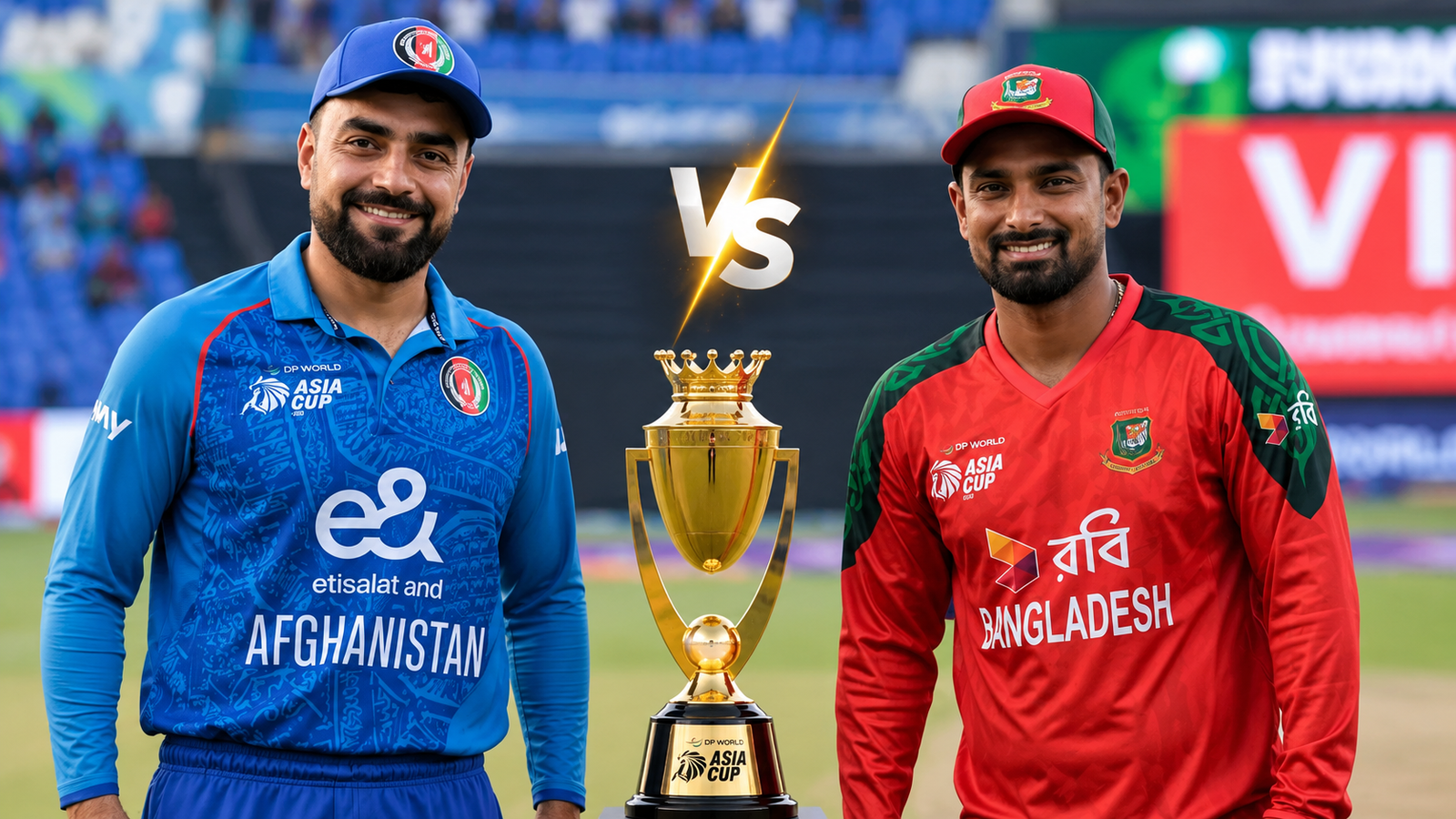
Bangladesh National Cricket Team vs Afghanistan National Cricket Team Timeline
Let’s cut through the noise. Across all formats, Bangladesh National Cricket Team vs Afghanistan National Cricket Team Timeline have played 33 matches as of 2025. Bangladesh has won 17, Afghanistan 16. That’s a margin so thin you could slide a scorecard through it.
But here’s what the stat sheet doesn’t capture: this is the only rivalry in world cricket where both teams entered the international arena as rank outsiders and are now legitimate threats to the establishment. Not India-Pakistan. Not Australia-England. This one.
The conventional narrative says Bangladesh is the more established side—full ICC membership since 2000, Test status since the same year. Afghanistan only got full membership in 2017. Yet Afghanistan leads the T20I head-to-head 7-5. In ODIs, Bangladesh leads 11-8. In Tests, it’s 1-1.
The rivalry is effectively a statistical dead heat. And that’s precisely what makes it fascinating.
The Genesis: 2014—When Everything Started
First ODI: Afghanistan Stuns Bangladesh
March 1, 2014. Asia Cup, Fatullah.
Afghanistan, still an associate nation at the time, posted 254/6 and bowled Bangladesh out for 222. A 32-run win. Bangladesh had been playing ODIs for 28 years. Afghanistan had been at it for five.
This wasn’t a fluke. This was a warning shot.
First T20I: Bangladesh Responds
March 16, 2014. ICC World Twenty20, Mirpur.
Bangladesh bowled Afghanistan out for 72 and chased it down with nine wickets to spare. The Tigers made a statement: don’t get too comfortable.
The Takeaway: The 2014 Asia Cup ODI was the moment Afghanistan announced themselves as more than just a feel-good story. They were a competitive force. Bangladesh, to their credit, didn’t let the loss define the rivalry.
Bangladesh’s Peak: 2016-2017
This period belongs to Bangladesh. Three ODIs in Mirpur in September-October 2016. Bangladesh won the series 2-1.
| Match | Result | Margin |
|---|---|---|
| 1st ODI | Afghanistan won | 7 runs (D/L) |
| 2nd ODI | Bangladesh won | 66 runs |
| 3rd ODI | Bangladesh won | 141 runs |
Tamim Iqbal’s 118 in the third ODI was the kind of innings that wins series. Bangladesh had depth, experience, and home conditions. Afghanistan had grit but not quite enough.
2017 saw Bangladesh consolidate. By this point, they were a top-eight ODI side, regularly beating full-member nations. Afghanistan was still climbing the ladder.
What the data shows: Bangladesh’s ODI series win in 2016 was built on batting first and posting totals. In the two wins, they scored 274 and 279. Afghanistan’s chase game wasn’t there yet.
The Shift: 2018—Afghanistan Takes Control
June 2018. Dehradun, India. Three T20Is.
Afghanistan won the series 3-0.
This was the inflection point. Not just because Afghanistan won—but because of how they won. Rashid Khan took nine wickets in the series. Bangladesh’s batsmen had no answer.
Rashid’s numbers against Bangladesh tell the story:
- T20Is: 22 wickets at an average of 10.54
- ODIs: 35 wickets at an average of 19.22
Those are generational numbers. Afghanistan didn’t just beat Bangladesh in 2018. They dominated them.
The strategic lesson: Afghanistan built their team around world-class spin. Bangladesh, historically strong against spin, suddenly looked vulnerable. The power dynamic had shifted.
2019: The Test Arrives—and Afghanistan Wins
September 5-9, 2019. One-off Test, Chattogram.
Rahmat Shah scored 102 in the first innings. Rashid Khan took 11 wickets in the match. In their first ever Test against each other, Afghanistan won comprehensively.
The context matters: Bangladesh had been playing Test cricket for 19 years. Afghanistan for just over a year. This wasn’t supposed to happen. It did.
2019 also gave us:
- ICC World Cup, Southampton: Bangladesh won by 62 runs—Shakib Al Hasan took 5/29
- Bangladesh T20 Tri-Series: Bangladesh won two; Afghanistan won one
The rivalry was now bidirectional. Either team could win on any given day.
The T20 Era: 2022-2024
2022: Split Decisions
| Match | Winner | Margin |
|---|---|---|
| Mar 3, 2022, Mirpur | Bangladesh | 61 runs |
| Mar 5, 2022, Mirpur | Afghanistan | 8 wickets |
| Aug 30, 2022, Asia Cup | Afghanistan | 7 wickets |
Afghanistan’s chase of 128 in the Asia Cup was clinical. Bangladesh’s 61-run win in Mirpur was emphatic. No one was dominating.
2023: Bangladesh Fights Back
July 2023. Sylhet. Two T20Is.
Bangladesh won both. The second T20I was a two-wicket thriller. Bangladesh proved they could win at home against a full-strength Afghanistan side.
2024: The T20 World Cup—Afghanistan’s Greatest Moment
June 24, 2024. Kingstown, St Vincent. T20 World Cup Super Eights.
Afghanistan won by 8 runs (DLS method) .
This was the match that changed everything.
Rashid Khan: 4/23.
Naveen-ul-Haq: 4/26.
Afghanistan defended 116 against a Bangladesh side chasing a revised target. They qualified for their first-ever World Cup semi-final. Bangladesh were knocked out. So were Australia.
The financial angle: Afghanistan’s semi-final appearance was worth an estimated $2.5-3 million in ICC prize money and broadcast revenue. For a board that operates on a fraction of what India or Australia spend, that’s transformational.
The cricketing angle: Afghanistan proved they could win under pressure in a global tournament. Not just bilateral series. Not just Asia Cups. The World Cup.
2025: The Year of Volatility
Asia Cup: Bangladesh Snatches Victory
September 16, 2025. Abu Dhabi. Asia Cup Group B.
After limiting Bangladesh to 154/5, Afghanistan collapsed to 146 all out. Rashid Khan admitted post-match: “We didn’t play our usual attacking cricket”.
Bangladesh’s Nasum Ahmed took 2/11 from four overs, including a wicket-maiden. Afghanistan’s chase never recovered.
This was a reminder: Even when Afghanistan are favorites, Bangladesh can pull the rug.
October 2025 ODI Series: Afghanistan Whitewash
Three ODIs in the UAE. Afghanistan won 3-0.
| Match | Result |
|---|---|
| 1st ODI | Afghanistan won by 5 wickets |
| 2nd ODI | Afghanistan won by 81 runs |
| 3rd ODI | Afghanistan won by 200 runs |
Afghanistan bowled Bangladesh out for 93 chasing 294. A 200-run defeat is Bangladesh’s heaviest against Afghanistan.
The takeaway: Afghanistan’s ODI batting lineup—Gurbaz, Ibrahim Zadran, Shahidi—has matured. Their bowling attack, led by Rashid, Mujeeb, and Farooqi, is elite.
October 2025 T20I Series: Bangladesh Sweeps
Sharjah. Three T20Is. Bangladesh won 3-0.
Bangladesh won by 4 wickets, 6 wickets, and 8 runs respectively.
The volatility is the story. In the space of three weeks, Afghanistan whitewashed Bangladesh in ODIs, and Bangladesh returned the favor in T20Is.
Head-to-Head: The Raw Numbers (As of 2026)
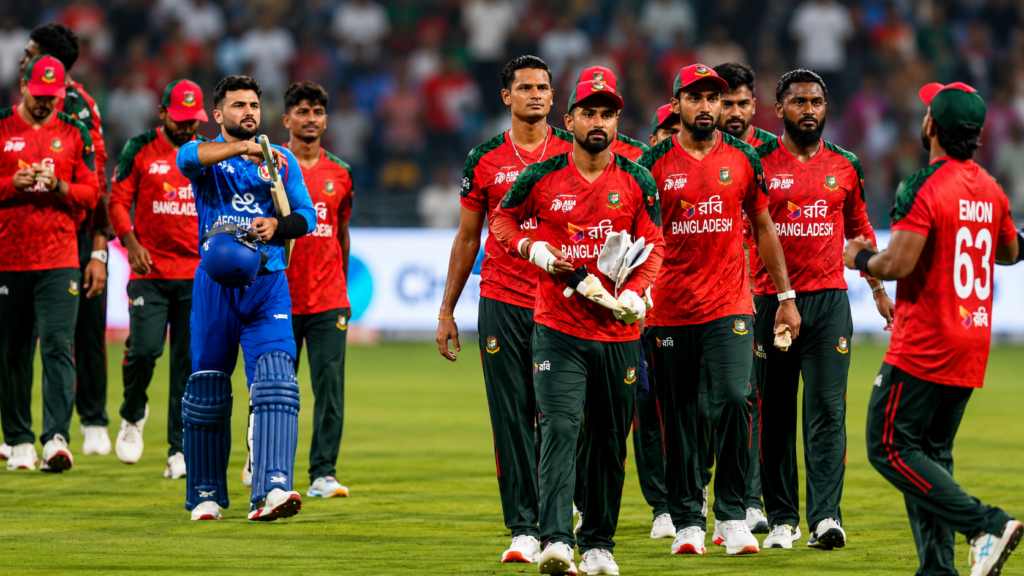
- Bangladesh: 2016, 2022
- Afghanistan: 2023, 2024
Bilateral T20I Series: Afghanistan won in 2018, Bangladesh in 2023, tied in 2022
ICC Tournaments: Bangladesh leads 4-1
What This Rivalry Reveals About International Cricket
1. The Associate-to-Full-Member Pipeline Works
Afghanistan’s rise isn’t an accident. It’s the result of ICC funding, pathway programs, and a generation of players who learned cricket in refugee camps in Pakistan. They now have:
- ICC Full Membership (2017)
- ODI ranking: 7th as of 2026
- A T20 World Cup semi-final (2024)
Bangladesh, meanwhile, has regressed in ODIs—slipping to 10th in 2025 after being a top-eight side for years.
The gap is closing. Fast.
2. Spin Still Wins Matches in Asia
Rashid Khan (35 ODI wickets vs Bangladesh) and Shakib Al Hasan (30 ODI wickets vs Afghanistan) are the two most impactful players in this rivalry.
Not pace. Not batting. Spin.
3. Home Advantage Is Overrated
Afghanistan has beaten Bangladesh in Bangladesh. Bangladesh has beaten Afghanistan in the UAE.
Neutral venues don’t favor either side. That’s why every match is a coin flip.
Are They Good in 2026?
Afghanistan: Yes. Ranked 7th in ODIs. The core of Rashid, Gurbaz, Ibrahim Zadran, and Farooqi is world-class. The batting depth is improving. The bowling attack is elite. They’re a top-six ODI side in waiting.
Bangladesh: Mixed. Ranked 9th in Tests and ODIs. They’ve shown they can beat anyone on their day—but inconsistency is their defining trait. The 2025 T20I series win over Afghanistan was a reminder of their ceiling. The 200-run ODI loss was a reminder of their floor.
Which Team Has the Highest Growth Potential?
Afghanistan. And it’s not particularly close.
- Younger core: Rashid is 27, Gurbaz is 24, Ibrahim Zadran is 24. Bangladesh’s key players—Shakib, Mushfiqur, Mahmudullah—are in their mid-to-late 30s.
- Better T20 infrastructure: Afghanistan’s players feature in leagues worldwide—IPL, CPL, BBL, ILT20. That exposure is invaluable.
- Higher ceiling: Afghanistan’s ODI ranking (7th) is already higher than Bangladesh’s (9th). In T20Is, they lead the head-to-head 7-5.
Bangladesh’s advantage: Test cricket. They’ve invested in the longer format and are now ranked 7th in Tests. Afghanistan’s Test program is still developing.
Key Players Who Define This Rivalry
Afghanistan
Bangladesh
What the Data Doesn’t Show
Emotion. Afghanistan plays every match like it’s a war. Bangladesh plays every match like it’s a reckoning.
History. Bangladesh has been playing international cricket for decades. Afghanistan has been relevant for barely a decade. The fact that the head-to-head is 17-16 tells you everything about Afghanistan’s trajectory.
Money. Afghanistan’s ICC funding is a fraction of what Bangladesh receives. Yet they compete. That’s not sustainable long-term—but it’s remarkable in the short term.
Featured Snippets
Q: When did Afghanistan and Bangladesh first play each other?
A: Their first ODI was on March 1, 2014, in the Asia Cup at Fatullah, which Afghanistan won by 32 runs. Their first T20I was on March 16, 2014, in the ICC World Twenty20 at Mirpur, which Bangladesh won by 9 wickets.
Q: Who leads the head-to-head between Afghanistan and Bangladesh?
A: Across all formats, Bangladesh leads 17-16 as of 2025. In ODIs, Bangladesh leads 11-8. In T20Is, Afghanistan leads 7-5. In Tests, it’s 1-1.
Q: What was Afghanistan’s biggest win over Bangladesh?
A: Afghanistan’s 200-run win in the 3rd ODI on October 14, 2025, in Abu Dhabi—Bangladesh’s heaviest defeat against Afghanistan. In Tests, Afghanistan won by 224 runs in Chattogram in September 2019.
Q: Are Afghanistan or Bangladesh better in 2026?
A: Afghanistan is ranked 7th in ODIs and has a younger, more dynamic core. Bangladesh is ranked 9th in ODIs and 9th in Tests, with an aging key player group. Afghanistan has higher growth potential.
Q: Which team has won more bilateral ODI series?
A: It’s tied 2-2. Bangladesh won in 2016 and 2022. Afghanistan won in 2023 and 2024.
FAQs About: Bangladesh National Cricket Team vs Afghanistan National Cricket Team Timeline
1. When did Afghanistan and Bangladesh first play each other in a Test match?
A: September 5-9, 2019, at the Zahur Ahmed Chowdhury Stadium in Chattogram. Afghanistan won by 224 runs.
2. What was the result of the 2024 T20 World Cup match between Afghanistan and Bangladesh?
A: Afghanistan won by 8 runs via the DLS method on June 24, 2024, in Kingstown. Rashid Khan took 4/23 and Naveen-ul-Haq took 4/26. Afghanistan qualified for their first-ever World Cup semi-final.
3. Who has scored the most runs in this rivalry?
A: For Bangladesh, Mushfiqur Rahim has the most ODI runs. For Afghanistan, Mohammad Nabi’s 84* is the highest T20I individual score in matches between these two teams.
4. How many times have Afghanistan and Bangladesh played each other in total?
A: As of 2025, they have played 33 matches across all formats—2 Tests, 19 ODIs, and 12 T20Is.
5. What was Bangladesh’s biggest win over Afghanistan?
A: Bangladesh won by 546 runs in the second Test match in Dhaka in June 2023—one of the biggest wins in Test history.
6. Who is the leading wicket-taker in this rivalry?
A: In ODIs, Shakib Al Hasan has 30 wickets for Bangladesh. Rashid Khan has 35 wickets for Afghanistan against Bangladesh.
7. Will Afghanistan and Bangladesh play more series in 2026?
A: The schedule is fluid, but with both teams in the top 10 across formats, bilateral and ICC tournament meetings are expected regularly. The rivalry is now a fixture in Asian cricket.
Conclusion: A Rivalry That Defies Expectations
Here’s what you need to know:
The numbers: Bangladesh leads 17-16 overall. It’s the tightest margin between any two Full Member nations with more than 30 matches played.
The trend: Afghanistan is rising. Bangladesh is holding steady. The gap is closing.
The reality: This rivalry produces must-watch cricket precisely because neither team is predictable. Afghanistan can chase anything. Bangladesh can defend anything. Both can collapse spectacularly.
What this means for the future: Expect more volatility. Expect more upsets. Expect Afghanistan to eventually overtake Bangladesh in the overall head-to-head—probably within the next 3-5 years.
The strategy: If you’re an ICC executive, you schedule more Bangladesh-Afghanistan series. They’re competitive, they’re dramatic, and they draw viewers. If you’re a fan, you watch every single match. You never know what you’ll get.
And that’s the point.
Explore more: Pakistan National Cricket Team vs Bangladesh National Cricket Team Timeline | Ranji Trophy 2025 Winner | KL Rahul | Pakistan South Africa: Hope to Heal the Hurt | Afghanistan vs India | Women’s Hockey USA | Kane Williamson Retires | San Francisco Unicorns: Can Data Deliver the Final Piece? | Ice Hockey at the Olympic Games | Most Runs in ODI | COD Name Ideas | India vs USA Cricket Timeline | Most Test Wickets | India’s Lowest Score in ODI
About the Author