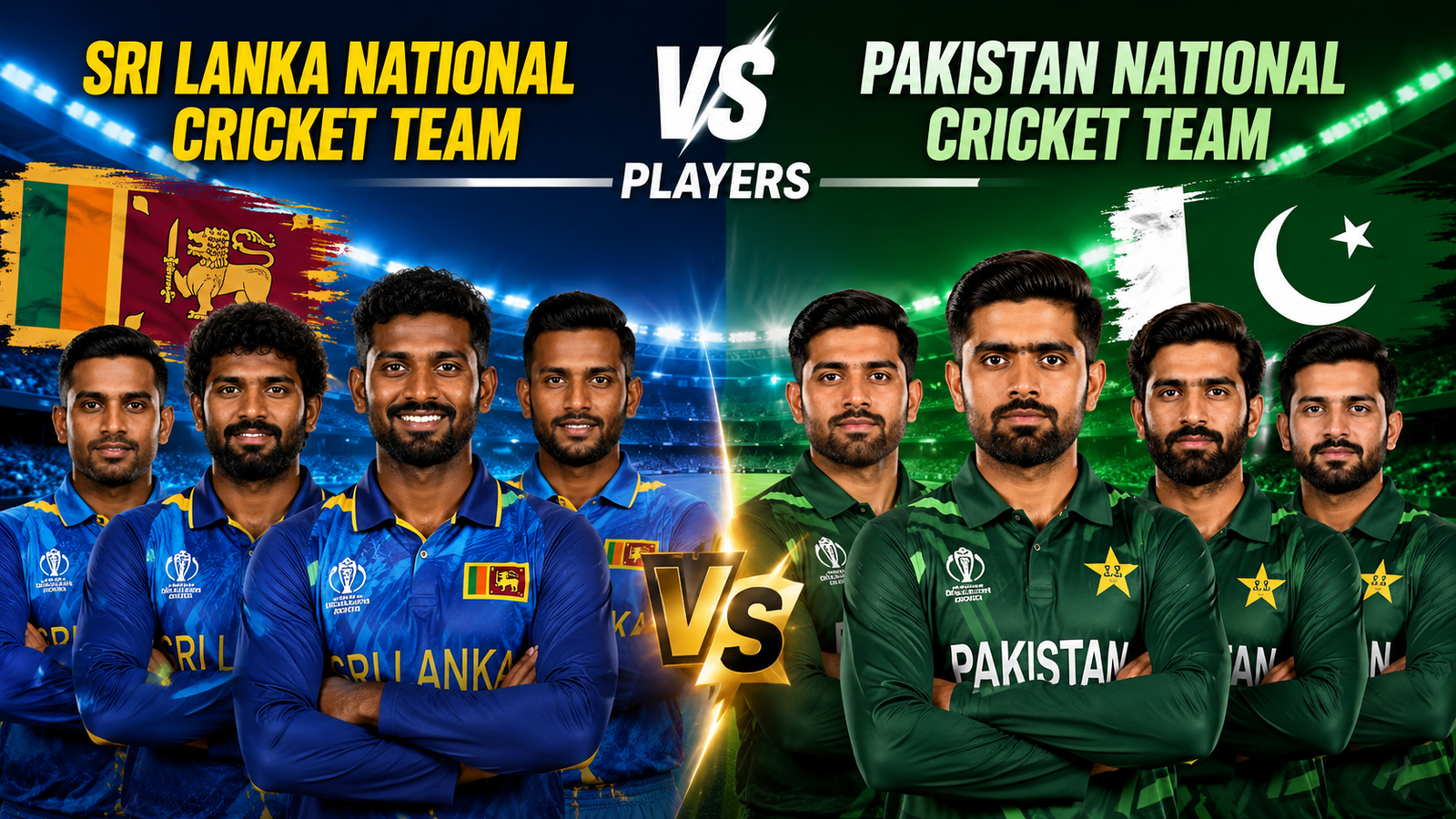
Sri Lanka National Cricket Team vs Pakistan National Cricket Team Players
The most relevant men’s player comparison in 2026 is built around the squads used at the ICC Men’s T20 World Cup. Pakistan’s core included Babar Azam, Fakhar Zaman, Sahibzada Farhan, Salman Agha, Shaheen Afridi, Naseem Shah, Shadab Khan and Mohammad Nawaz. Sri Lanka’s group featured Pathum Nissanka, Kusal Mendis, Charith Asalanka, Kamindu Mendis, Dasun Shanaka, Maheesh Theekshana, Dunith Wellalage and Dushmantha Chameera.
But there is an important distinction: a squad list is not the same thing as a team’s real competitive strength. Pakistan’s top-end pace and batting ceiling give it a higher volatility profile, while Sri Lanka’s combination of spin, adaptable middle-order batting and home familiarity makes it more dangerous than a simple ranking comparison suggests.
The latest men’s competitive meeting came in the T20 World Cup Super Eight on February 28, 2026. Pakistan won by five runs, scoring 212/8 before Sri Lanka replied with 207/6.
Sri Lanka National Cricket Team vs Pakistan National Cricket Team Players, Squad
Sri Lanka national cricket team and Pakistan national cricket team have enough stylistic overlap to make this matchup particularly interesting.
Pakistan generally has the more intimidating pace profile. Sri Lanka, meanwhile, can create problems through spin, flexible all-rounders, and players comfortable in slower Asian conditions.
That difference matters.
A market operator would not simply ask, Which team has better players? The better question is: Which team’s strengths are more likely to survive the conditions of the match?
Pakistan’s key 2026 players
The confirmed 15-member Pakistan T20 World Cup squad was:
- Salman Ali Agha — captain
- Abrar Ahmed
- Babar Azam
- Faheem Ashraf
- Fakhar Zaman
- Khawaja Mohammad Nafay
- Mohammad Nawaz
- Salman Mirza
- Naseem Shah
- Sahibzada Farhan
- Saim Ayub
- Shaheen Shah Afridi
- Shadab Khan
- Usman Khan
- Usman Tariq
The ICC confirmed this squad in February 2026, with Babar’s return and the Shaheen-Naseem pace combination among the major talking points.
Sri Lanka’s key 2026 players
Sri Lanka’s confirmed T20 World Cup squad included:
- Dasun Shanaka — captain
- Pathum Nissanka
- Kamil Mishara
- Kusal Mendis
- Kamindu Mendis
- Kusal Janith Perera
- Charith Asalanka
- Janith Liyanage
- Pavan Rathnayake
- Dushan Hemantha
- Dunith Wellalage
- Maheesh Theekshana
- Dushmantha Chameera
- Matheesha Pathirana
- Eshan Malinga
Sri Lanka’s squad was built around a mixture of established international players and younger options, with the all-rounder depth particularly useful in T20 cricket.
Pakistan vs Sri Lanka: Who Are the Most Important Players?
The answer depends heavily on format, but several names stand above the rest.
1. Babar Azam — Pakistan
Babar remains one of Pakistan’s most important batting assets because his value is not limited to boundary hitting.
His ability to control an innings gives Pakistan a stabilizing option when early wickets fall. That matters against Sri Lanka because the island nation’s bowling attack can make acceleration uncomfortable on slower surfaces.
The contrarian view is that Babar’s value is sometimes misunderstood in T20 cricket. His biggest contribution can come from preventing a collapse, rather than simply producing the highest strike rate.
2. Shaheen Shah Afridi — Pakistan
Shaheen changes the risk profile of the matchup.
A new-ball wicket can force Sri Lanka to abandon its preferred batting sequence before the middle overs even begin. His left-arm angle also creates a different problem from Naseem Shah’s right-arm pace.
Pakistan’s attack becomes considerably more dangerous when Shaheen gets movement early.
3. Sahibzada Farhan — Pakistan
Farhan was one of the most interesting emerging names in Pakistan’s 2026 setup.
His importance was demonstrated against Sri Lanka in the T20 World Cup Super Eight, when he was part of the record partnership with Fakhar Zaman that powered Pakistan to 212/8.
This is exactly the type of player analysts should watch: not necessarily the most famous name, but a player capable of changing the expected scoring curve.
4. Wanindu Hasaranga — Sri Lanka
Hasaranga was not included in Sri Lanka’s final T20 World Cup squad after being ruled out, which significantly changed the team’s balance.
Before that, however, his impact against Pakistan had been obvious.
In January 2026, Hasaranga took 4/35 in the rain-shortened third T20I as Sri Lanka defeated Pakistan by 14 runs. He was Player of the Match and Player of the Series.
That tells you something important: Sri Lanka’s best route against Pakistan is often not a pure batting shootout. It is creating enough uncertainty for spin and variation to become match-winning factors.
5. Kusal Mendis — Sri Lanka
Mendis is one of Sri Lanka’s major attacking batting options.
He can score quickly against pace but also has the range to attack spin. His role becomes particularly important if Sri Lanka loses an opener early and needs someone to bridge the innings without sacrificing scoring momentum.
6. Pathum Nissanka — Sri Lanka
Nissanka is the kind of batter who can quietly determine the shape of an entire innings.
If he survives the first phase, Sri Lanka can enter the middle overs with significantly more flexibility. If Pakistan removes him early, the pressure shifts quickly toward the middle order.
7. Shadab Khan — Pakistan
Shadab brings something Pakistan badly needs in tight T20 contests: multiple ways to influence the game.
He can bowl leg-spin, contribute runs and field aggressively.
His importance was visible in the first T20I of Pakistan’s January 2026 tour of Sri Lanka. Shadab took 2/25 and then scored an unbeaten 18 from 12 balls as Pakistan won by six wickets.
Sri Lanka vs Pakistan Players: Recent 2026 Results
The recent record is more complicated than simply saying Pakistan dominates.
January 2026 T20I series
Pakistan toured Sri Lanka for three T20Is at Dambulla.
| Match | Result | Key detail |
|---|---|---|
| 1st T20I | Pakistan won by 6 wickets | Shadab Khan starred |
| 2nd T20I | Abandoned | No ball bowled |
| 3rd T20I | Sri Lanka won by 14 runs | Wanindu Hasaranga took 4/35 |
The series therefore finished 1-1, with one match abandoned.
That is a more useful signal than calling the matchup one-sided.
Pakistan won the first game convincingly, but Sri Lanka adjusted and won the shortened third match. The lesson is straightforward: conditions and match format can move the probability distribution quickly.
Pakistan’s 2025 ODI Advantage Was Much Clearer
The ODI picture was considerably more favorable to Pakistan.
Pakistan swept Sri Lanka 3-0 in the November 2025 ODI series in Rawalpindi.
The margins were:
- 1st ODI — Pakistan won by 6 runs
- 2nd ODI — Pakistan won by 8 wickets
- 3rd ODI — Pakistan won by 6 wickets
Pakistan scored 299/5 in the first ODI, 289/2 in the second and chased 212 in the third.
The first match is especially revealing. Salman Ali Agha scored an unbeaten 105, while Hussain Talat added 62 and Mohammad Nawaz finished with an explosive 36 from 23 balls. Pakistan reached 299/5 and defended the total by six runs.
That was not simply a Babar Azam story.
It was a depth story.
Pakistan could lose established top-order wickets and still produce enough lower-order acceleration to turn a competitive score into a winning one.
The Hidden Battle: Batting Depth vs Bowling Variety
This is where casual previews often miss the real matchup.
Pakistan’s advantage is its ability to create several scoring and wicket-taking routes.
Sri Lanka’s advantage is flexibility.
Pakistan’s structural strengths
- High-quality left-arm pace through Shaheen Afridi
- Right-arm pace options
- Babar’s innings control
- Fakhar’s power game
- Shadab and Nawaz as multi-skill players
- Increasing depth around Sahibzada Farhan and other younger players
Sri Lanka’s structural strengths
- Spin-friendly bowling options
- Kusal Mendis’ attacking wicketkeeping-batting role
- Pathum Nissanka’s stability
- Charith Asalanka’s middle-order flexibility
- Kamindu Mendis’ all-round value
- Multiple bowling variations
The interesting part is that these strengths attack different failure points.
Pakistan wants to make Sri Lanka’s first six overs expensive or dangerous.
Sri Lanka wants to make Pakistan’s middle overs uncomfortable.
Sri Lanka vs Pakistan Head-to-Head
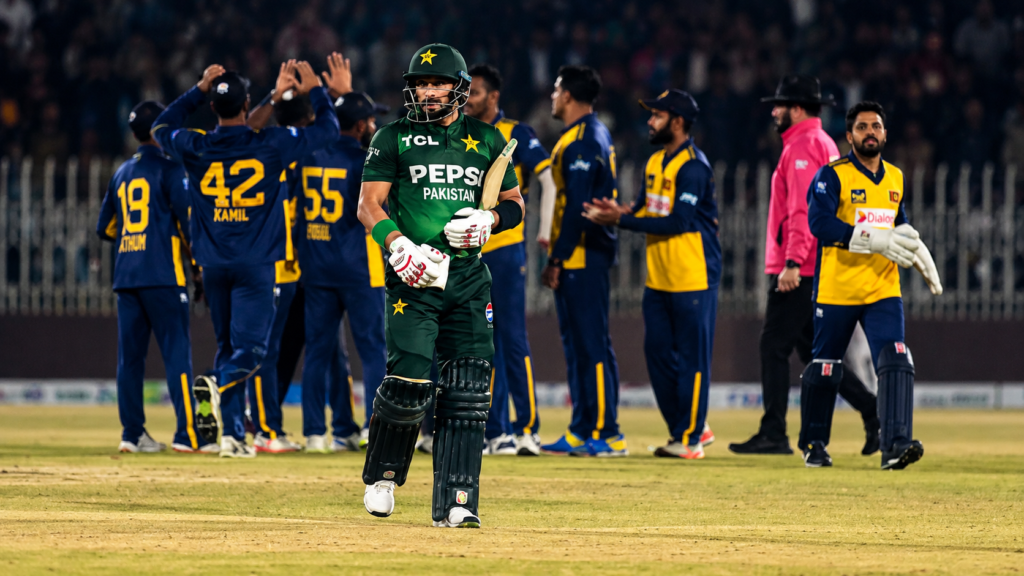
Across T20 internationals, Pakistan have historically held the advantage. One recent head-to-head database lists Pakistan with 18 wins to Sri Lanka’s 12 from 30 T20 meetings.
But historical head-to-head numbers can be misleading.
Why?
Because player generations change, formats evolve and the value of a decade-old result is not the same as a result from six months ago.
For 2026 analysis, the more relevant evidence is:
- Pakistan swept the 2025 ODI series.
- The January 2026 T20I series ended 1-1 with one abandonment.
- Pakistan then defeated Sri Lanka by five runs at the T20 World Cup in February 2026.
That is a much cleaner information set.
Who Has the Better Players in 2026?
Pakistan has the stronger top-end match-winning profile, but Sri Lanka has enough tactical flexibility to neutralize that advantage under the right conditions.
Pakistan’s ceiling is higher when its premier fast bowlers and top-order batters click together. Sri Lanka becomes more dangerous when the pitch slows down and its spinners and all-rounders can dictate the middle overs.
If the pitch favors pace
Edge: Pakistan
Shaheen Afridi, Naseem Shah and the broader pace unit become major weapons.
If the pitch is slow and gripping
Edge: Sri Lanka
Sri Lanka’s spin and variation can make Pakistan’s middle-order acceleration harder.
If the game becomes a high-scoring shootout
Slight edge: Pakistan
The combination of Fakhar, Babar, Farhan, Salman and Shadab gives Pakistan several scoring profiles.
If the match becomes chaotic
No clear edge
That is where both teams have players capable of changing a game in 10 balls.
2026 Growth Players to Watch
The biggest upside may not come from the established stars.
Pakistan
Sahibzada Farhan is the obvious name after his impact against Sri Lanka at the T20 World Cup.
Khawaja Nafay and Salman Mirza also represent the next layer of Pakistan’s player pipeline. The key question is whether they can convert opportunity into sustained international production.
Sri Lanka
Janith Liyanage deserves attention.
He was Sri Lanka’s leading run-scorer during the January 2026 T20I series, finishing with 62 runs across two innings.
Kamindu Mendis is another high-upside player because his value comes from flexibility rather than one isolated skill.
Pavan Rathnayake is also worth monitoring as Sri Lanka continues refreshing its white-ball batting group.
Are Sri Lanka and Pakistan Good Teams in 2026?
Yes, but they are good in different ways. Pakistan have the higher ceiling in terms of elite pace and top-order firepower, while Sri Lanka possess greater tactical flexibility in Asian conditions. The February 2026 T20 World Cup meeting showed how close the contest can become: Pakistan won by only five runs.
Which Players Have the Highest Growth Potential?
Sahibzada Farhan is arguably Pakistan’s most obvious growth story after his decisive T20 World Cup performance against Sri Lanka. For Sri Lanka, Janith Liyanage and Pavan Rathnayake represent younger batting options worth tracking. Kamindu Mendis also offers unusual all-round flexibility, making him particularly valuable in T20 cricket.
Who Has the Stronger Bowling Attack?
Pakistan has the stronger pace-oriented attack, especially when Shaheen Afridi and Naseem Shah are available and fit. Sri Lanka’s advantage is variation, with spin and slower bowling becoming particularly valuable on surfaces that do not reward pure pace. The matchup therefore depends heavily on venue and pitch behavior.
Who Is the Most Important Player in the Matchup?
There is no single answer across formats. For Pakistan, Shaheen Afridi and Babar Azam are the high-impact established names, while Sahibzada Farhan represents the newer upside. For Sri Lanka, Kusal Mendis, Pathum Nissanka and Charith Asalanka remain important batting pieces, with spin and all-round options shaping the bowling strategy.
The Scorecard Matters — But the Context Matters More
Search behavior around Sri Lanka national cricket team vs Pakistan national cricket team players often focuses heavily on the latest scorecard, first ODI, last over and individual player statistics.
Those searches are useful, but they can produce a distorted picture.
A five-run T20 victory does not mean Pakistan is five runs better than Sri Lanka.
A six-run ODI victory does not mean Pakistan has a permanent advantage.
The more useful analytical question is why the margin was five or six runs.
In the February 2026 World Cup meeting, Pakistan posted 212/8 and Sri Lanka still reached 207/6. That tells us both teams possessed enough batting depth to keep the game alive deep into the innings.
That is the signal worth carrying forward.
What Could Change the Balance?
Scenario 1: Pakistan’s top order fires
If Babar, Fakhar or Farhan establishes a platform, Pakistan’s finishing resources become difficult to contain.
Scenario 2: Sri Lanka removes early wickets
This is probably Sri Lanka’s cleanest route.
Early wickets force Pakistan’s middle order to rebuild instead of attack.
Scenario 3: Spin dominates the middle overs
Sri Lanka’s probability improves significantly when the pitch rewards grip and changes of pace.
Scenario 4: New-ball movement
This favors Pakistan.
Shaheen and Naseem can create a very different contest before Sri Lanka’s middle order settles.
The risk for both teams is overconfidence in a single template. Cricket rarely rewards teams that assume the pitch, toss or match state will behave exactly as expected.
FAQ: Sri Lanka National Cricket Team vs Pakistan National Cricket Team Players
1. Who are the key Pakistan players against Sri Lanka?
A: Babar Azam, Fakhar Zaman, Sahibzada Farhan, Salman Agha, Shaheen Shah Afridi, Naseem Shah and Shadab Khan are among Pakistan’s most important players in the current white-ball setup. Their roles cover batting stability, power hitting, pace bowling and all-round flexibility.
2. Who are the key Sri Lanka players against Pakistan?
A: Pathum Nissanka, Kusal Mendis, Charith Asalanka, Kamindu Mendis, Dasun Shanaka, Maheesh Theekshana and Dushmantha Chameera are important names in Sri Lanka’s current white-ball structure.
3. Who won the latest Sri Lanka vs Pakistan men’s match?
A: Pakistan won the latest men’s meeting by five runs in the ICC Men’s T20 World Cup Super Eight on February 28, 2026. Pakistan scored 212/8 and Sri Lanka finished on 207/6.
4. Who won the January 2026 T20I series?
A: The three-match series ended 1-1, with the second match abandoned without a ball being bowled. Pakistan won the first T20I by six wickets, while Sri Lanka won the rain-shortened third T20I by 14 runs.
5. Who won the 2025 ODI series between Sri Lanka and Pakistan?
A: Pakistan won the three-match ODI series 3-0. They won the first ODI by six runs, the second by eight wickets and the third by six wickets.
6. Who is the best player in Sri Lanka vs Pakistan matches?
A: There is no universal answer because the formats reward different skills. Babar Azam and Shaheen Afridi are major Pakistan match-winners, while Kusal Mendis, Pathum Nissanka and Sri Lanka’s spin options are central to their challenge. Recent form should matter more than reputation alone.
7. Is Pakistan stronger than Sri Lanka in 2026?
A: Pakistan has the stronger overall white-ball ceiling, particularly in pace bowling and top-order firepower. But the gap is not large enough to ignore conditions. Sri Lanka’s ability to exploit spin-friendly surfaces means a matchup can shift dramatically from one venue to another.
Conclusion
The cleanest takeaway from Sri Lanka national cricket team vs Pakistan national cricket team players is that this is not a simple star-counting exercise.
Pakistan has the bigger high-end weapons: Babar’s control, Fakhar’s power, Shaheen’s new-ball threat, Naseem’s pace and Shadab’s all-round value.
Sri Lanka’s case is different.
Its advantage comes from adaptability, spin, flexible batting and familiarity with Asian conditions.
Recent evidence supports that balance. Pakistan swept Sri Lanka 3-0 in the 2025 ODI series, the January 2026 T20I series finished 1-1, and Pakistan edged Sri Lanka by only five runs in the T20 World Cup.
For anyone assessing the next matchup, the smarter strategy is not to blindly follow historical head-to-head records.
Watch the toss, pitch behavior, opening partnerships and the first six overs.
Those four variables are likely to tell you far more about the actual contest than reputation ever will.
Related Reading:
For readers following the wider cricket ecosystem, these related SportStoryline guides provide useful context:
- Pakistan vs Bangladesh timeline
- Ranji Trophy 2025 winner
- KL Rahul profile
- Pakistan and South Africa cricket analysis
- Afghanistan vs India
- Women’s Hockey USA
- Kane Williamson retirement analysis
- San Francisco Unicorns and data analysis
- Ice hockey at the Olympic Games
- Most runs in ODI cricket
- COD name ideas
- India vs USA cricket timeline
- Most Test wickets
- India’s lowest ODI score
About the Author